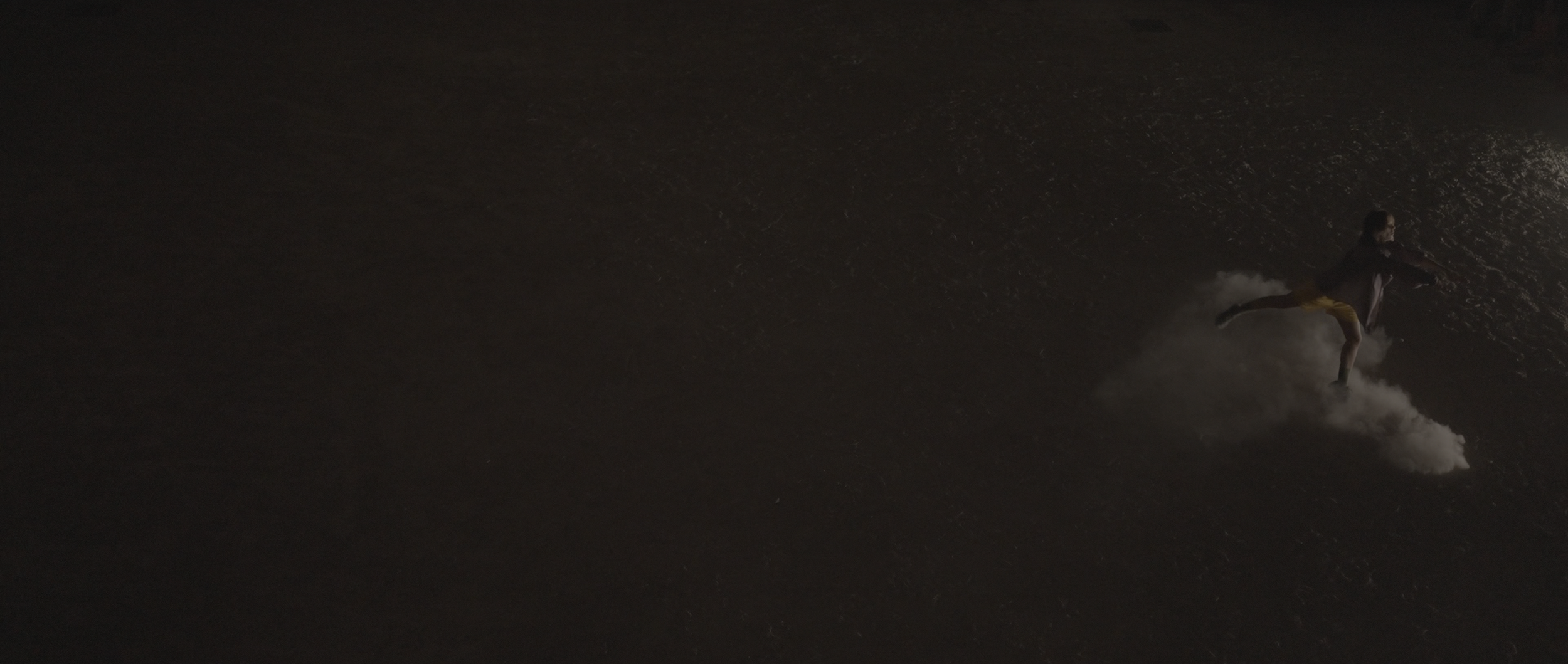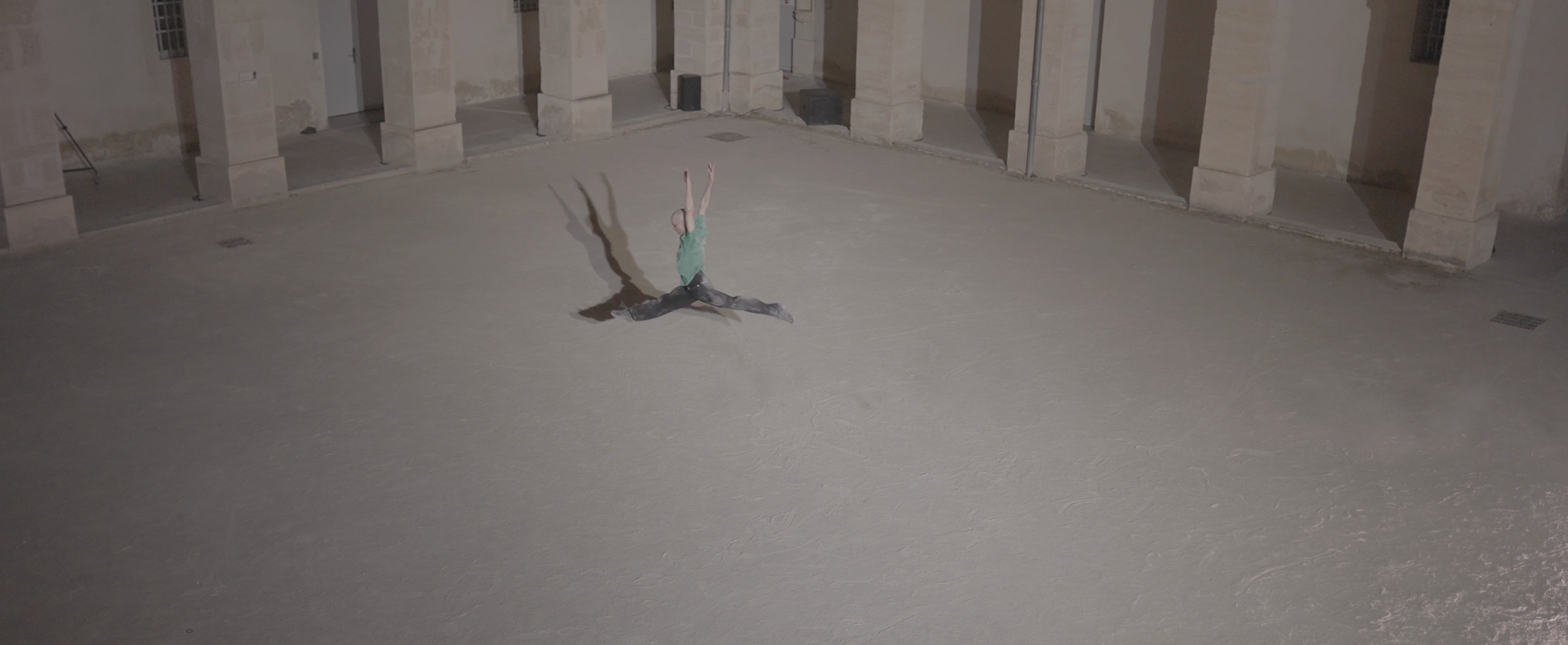
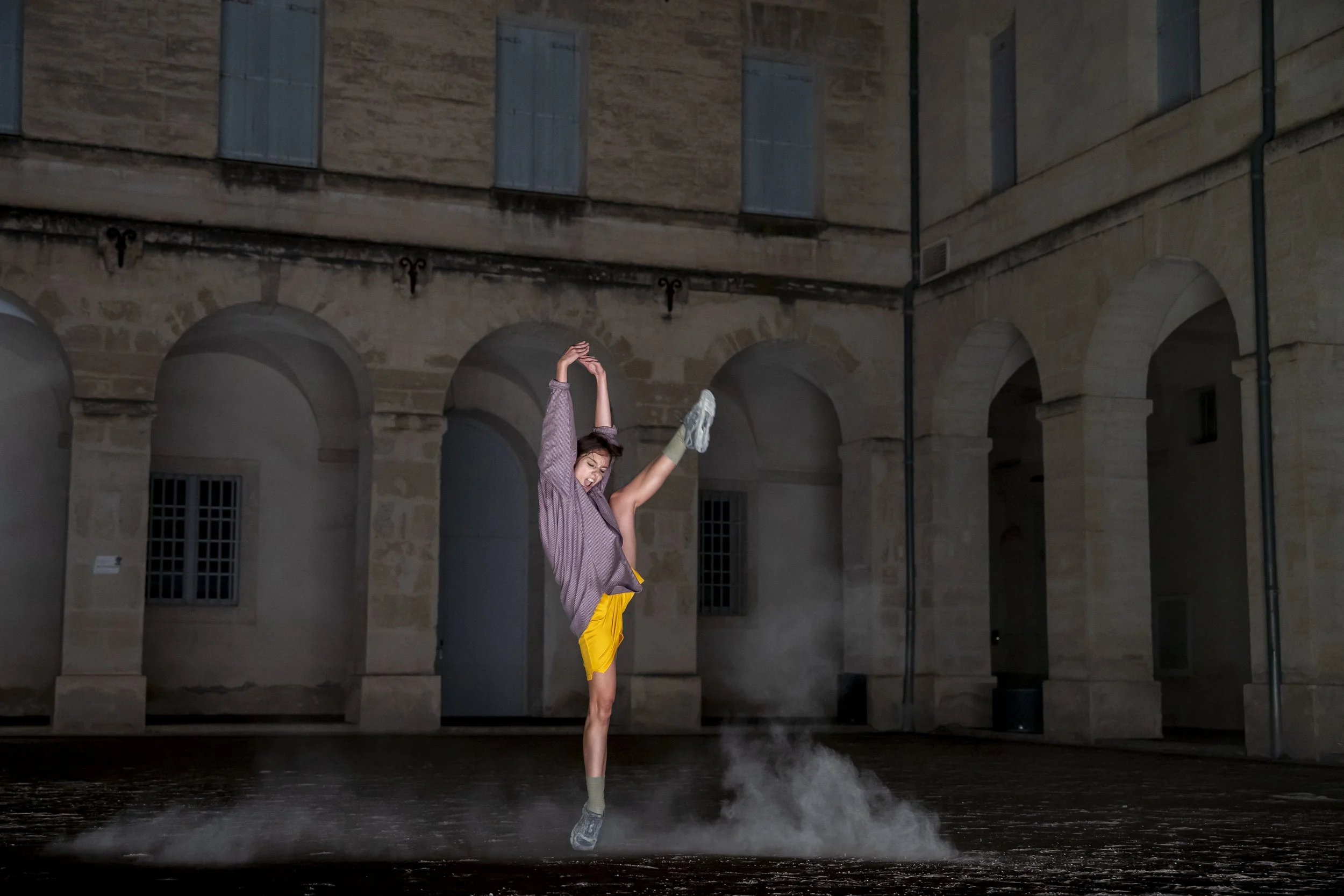
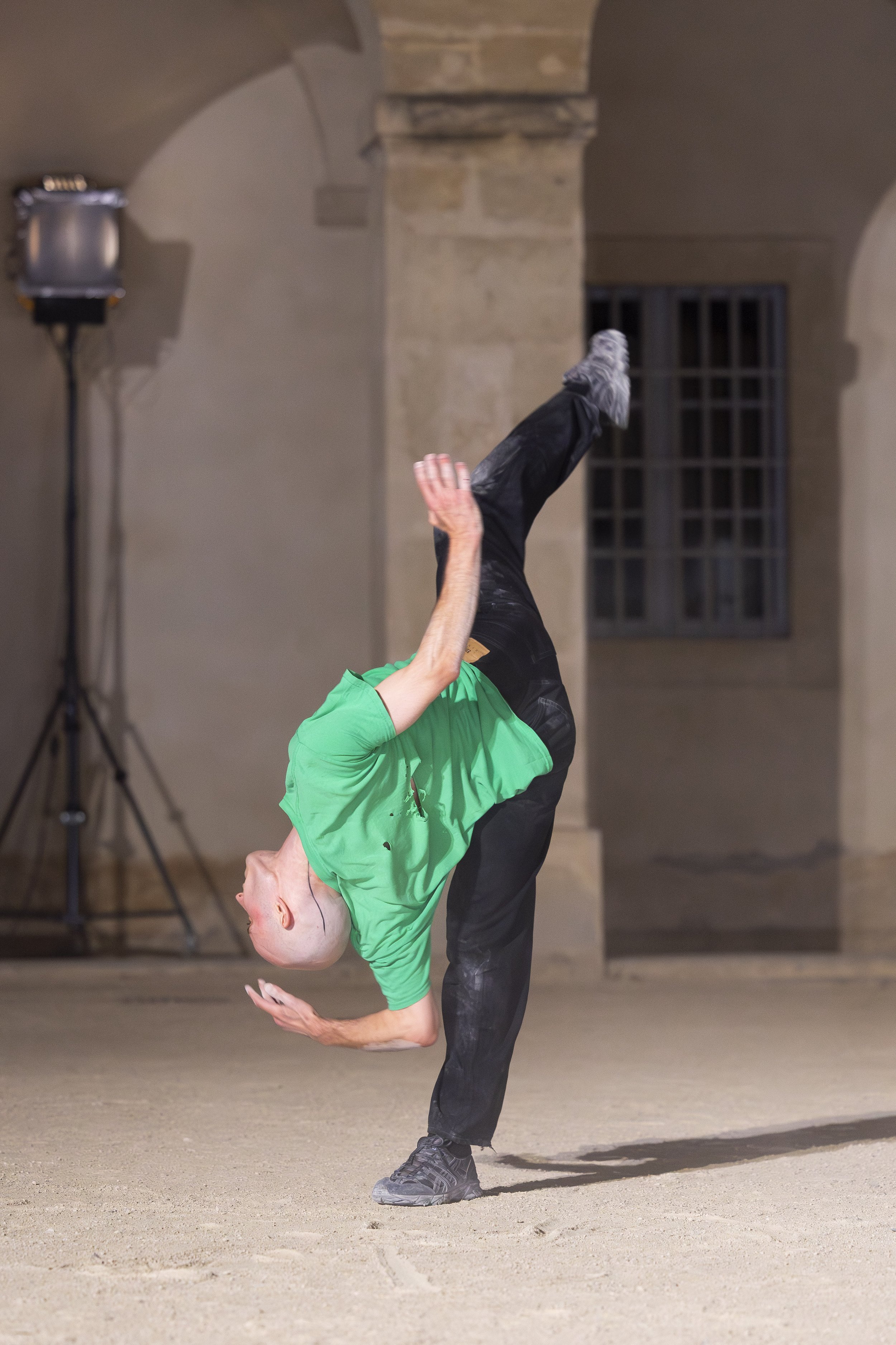
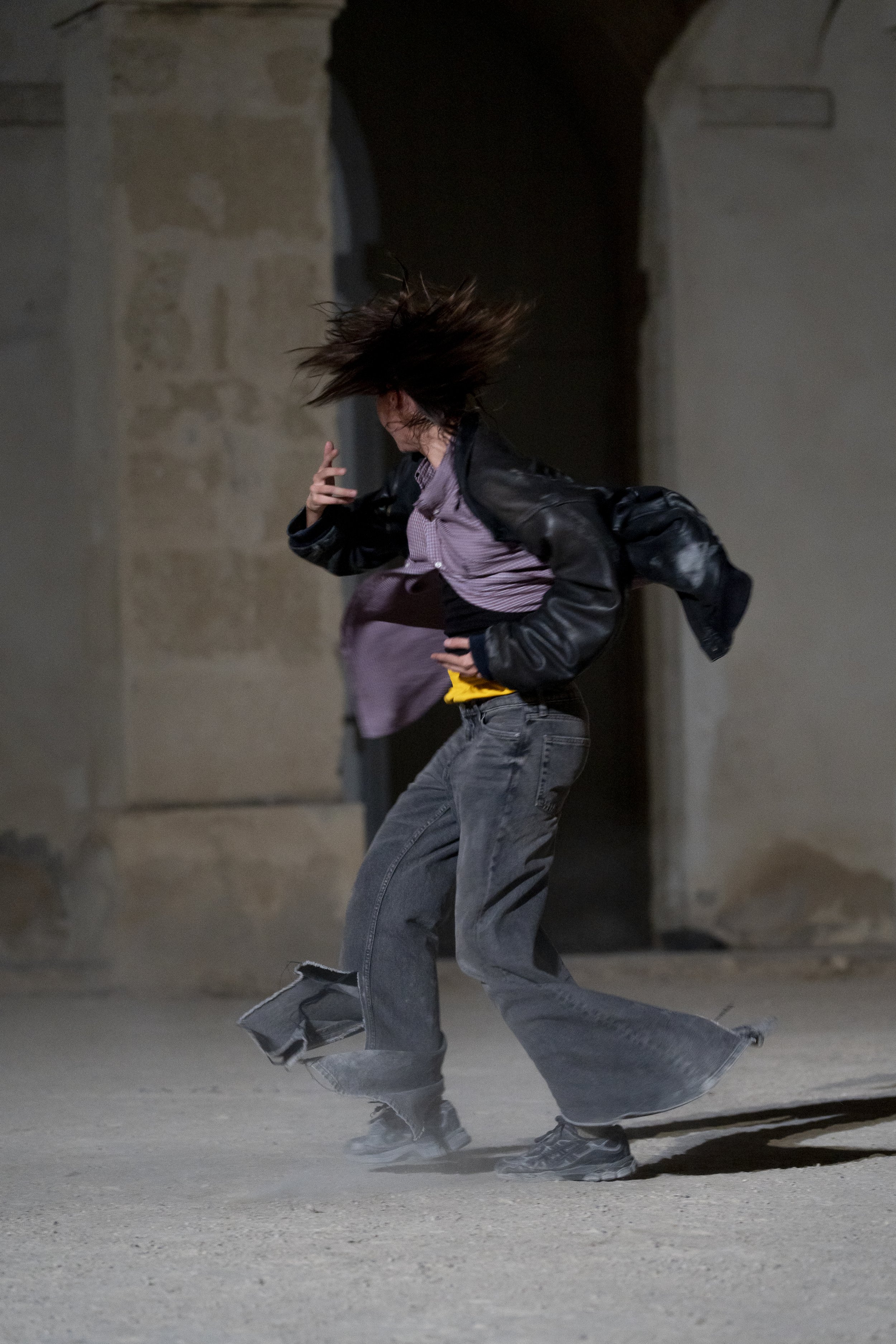
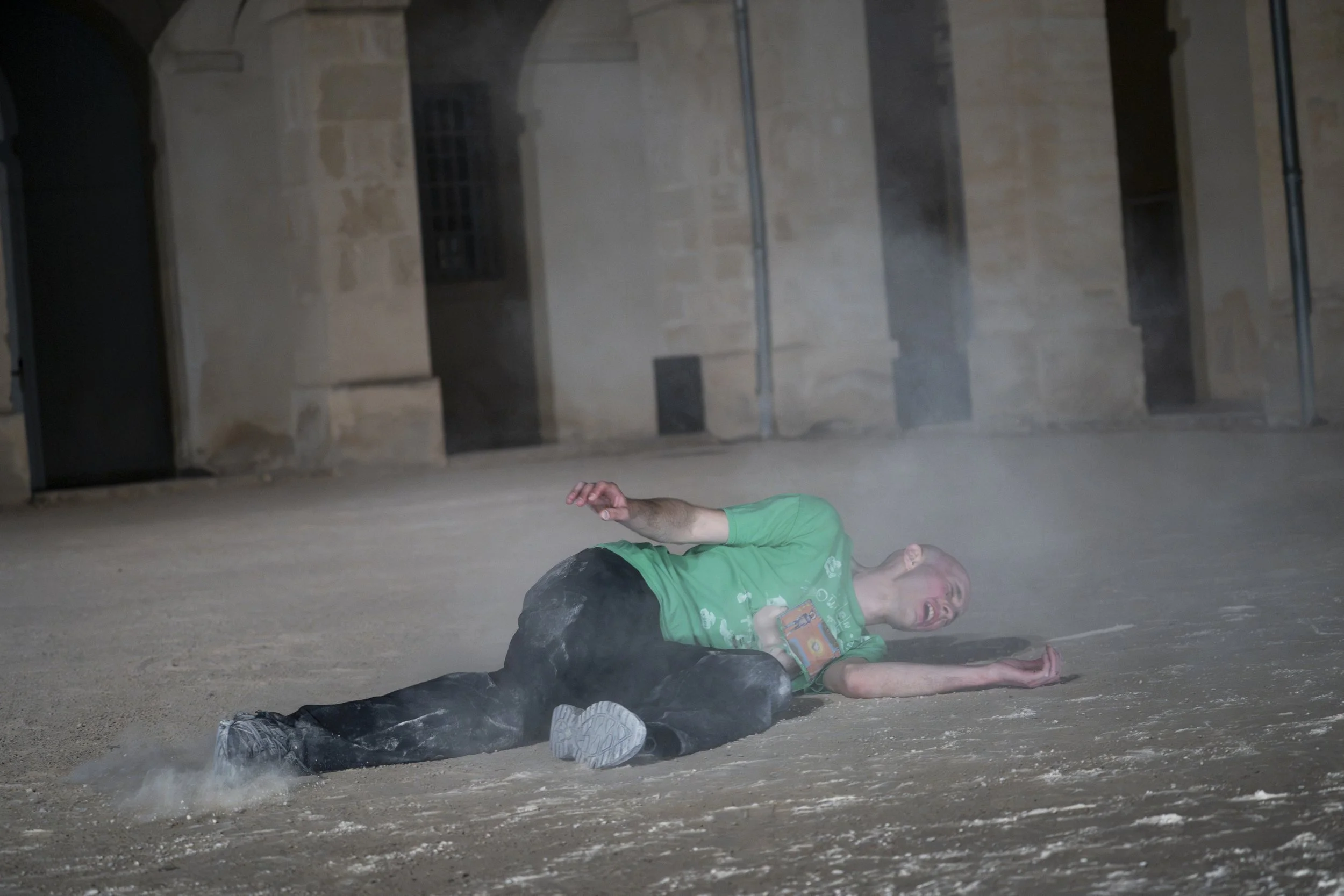
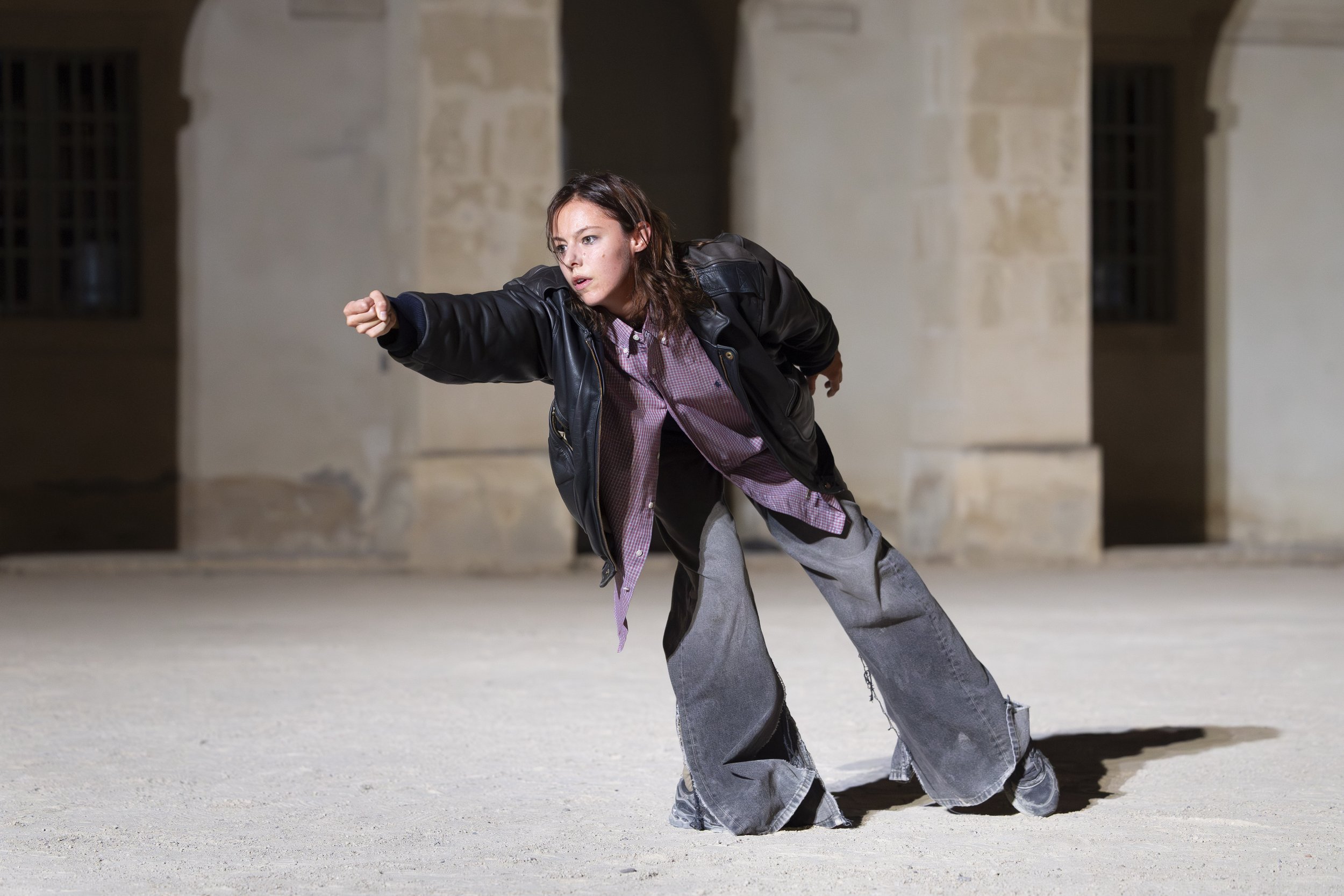
“Ulysse Marion, receiving its world premiere, was the first standout of the Montpellier weekend. Brought together by Dimitri Chamblas, Ulysse Zangs and Marion Barbeau display their dazzling talent over the course of 55 riveting minutes…
Ulysse Marion unfolds like a rare and deeply generous double portrait.”
Ulysse Marion
Two solo by Dimitri Chamblas for Marion Barbeau and Ulysse Zangs
In this new creation, Dimitri Chamblas delves into the life stories of two dancers, exploring how the practice of art has shaped their lives throughout the years and transformed them into extraordinary beings. After group pieces, this work marks a return to intimacy — to the singular relationship born of countless hours spent together in the studio.
Through long conversations with Marion Barbeau and Ulysse Zangs, childhood memories resurfaced, a time when dance was still just an idea, a dream that would take shape during adolescence. The decision to enter the dance school of the Opéra national de Paris marked a rupture with their family environments and led them to renew both mind and body in different ways. Training in such prestigious institutions is rigorous and instills lifelong working habits. For both Ulysse and Marion, this demanding relationship with dance never excluded a curiosity for other disciplines. He also practices music, while she explores acting. Dance, deeply anchored in their bodies, continues to express itself at a level that moves the audience with admiration and emotion. It quite literally inhabits them – flowing through every muscle, turning even the smallest gesture into a perfectly accomplished trace of their lives. Yet in this project, virtuosity is not an end in itself, but rather a means of opening new fields of sensitivity, in order to rediscover within the chaos and intimacy of buried memories, that which connects them to the audience.
“These two ballet rebels demonstrate that it is possible to break free from the constraints of institutional tradition. Classical and contemporary dance can intersect and enrich one another in perfect harmony.”
The question of space then arises: leaving the studio to explore amplitude and vastness. An experience in the California desert reminded Dimitri that spaces we perceive as empty are often felt as inhabited by invisible presences, and one becomes aware of being observed in what seems like nothingness. The performance will unfold in bare, expansive spaces, because distance surprisingly brings us closer to intimacy. It tests the performer’s courage in solitude and their familiarity with their own phantoms.
Ulysse Marion gently unveils a unique experience of emotion, an invitation to summon those who are absent so they may accompany two remarkable performers encountering their own mystery, their own story.
TODAY, YOU ARE ENGAGED IN A WIDE RANGE OF VERY DIFFERENT PROJECTS. WHAT ARE THE MAJOR QUESTIONS CURRENTLY GUIDING YOUR WORK?
For more than thirty years, I have indeed pursued very different kinds of projects, yet I have never considered them as separate activities. Since childhood, I have felt that dance and life are profoundly intertwined. Dance has not merely given me a profession; it has offered me a way of encountering the world, moving through it, and questioning it. Since 2017, I have been a professor and researcher at CalArts in California, while also developing projects in maximum-security prisons in both the United States and France. I have likewise had the opportunity to collaborate with musicians, visual artists, cultural institutions, and the world of fashion. I do not place these experiences in any hierarchy. To me, they all belong to the same ongoing inquiry. What interests me are the situations dance makes possible, the encounters it creates. What connects all of these projects is perhaps an attentiveness to bodies, to the histories they carry, and to the contexts in which they evolve. Whether in a rehearsal studio, a university, a prison, an opera stage, or a fashion runway, the question ultimately remains the same: how does dance allow us to enter into relationship with the world, with others, and with ourselves?
[Interview conducted by Wilson Le Personnic in June 2026]
ULYSSE MARION IS A CREATION FOR AND WITH ULYSSE ZANGS AND MARION BARBEAU. COULD YOU RETRACE THE GENESIS OF THIS PROJECT?
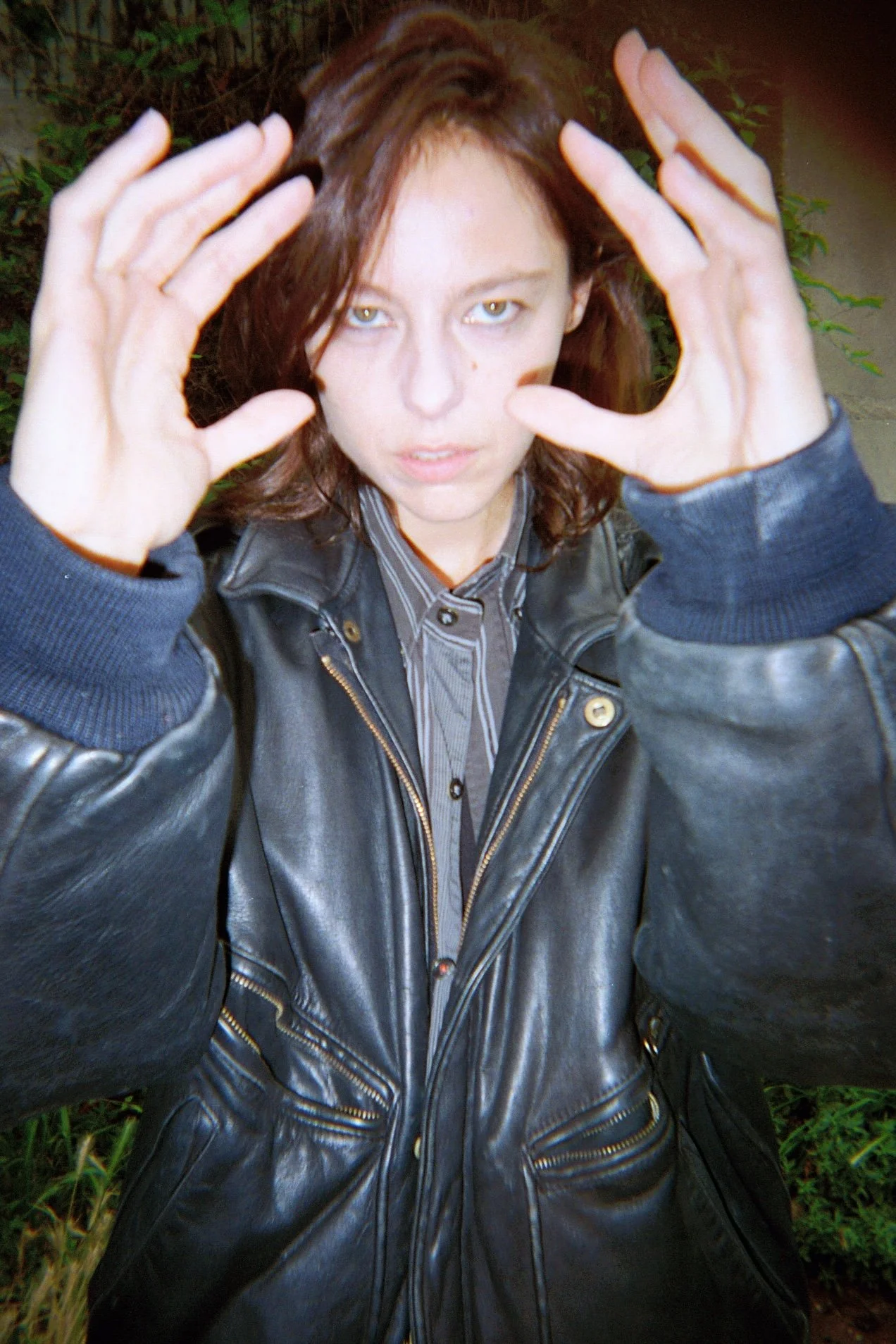
The genesis of Ulysse Marion is above all a story of encounters. It is a project that gradually took shape through collaborations, friendships, and shared artistic experiences. I first met Marion in 2015 through the 3ème Scène of the Paris Opera, for which I was then artistic director. The idea was to invite artists from very different backgrounds to imagine projects connected to the institution. Among them was Glen Keane, the legendary American animator, who came to work with Marion. It was on that occasion that I first observed her in the studio. I was immediately struck by her presence, her strength, and her singular personality. She possesses a kind of determination, freedom, and intensity that permeates both her dancing and her way of being. A few years later, I invited her to join my piece takemehome, and our artistic relationship continued to deepen. Over time, we became friends, and that mutual trust nurtured the desire to work together more profoundly.
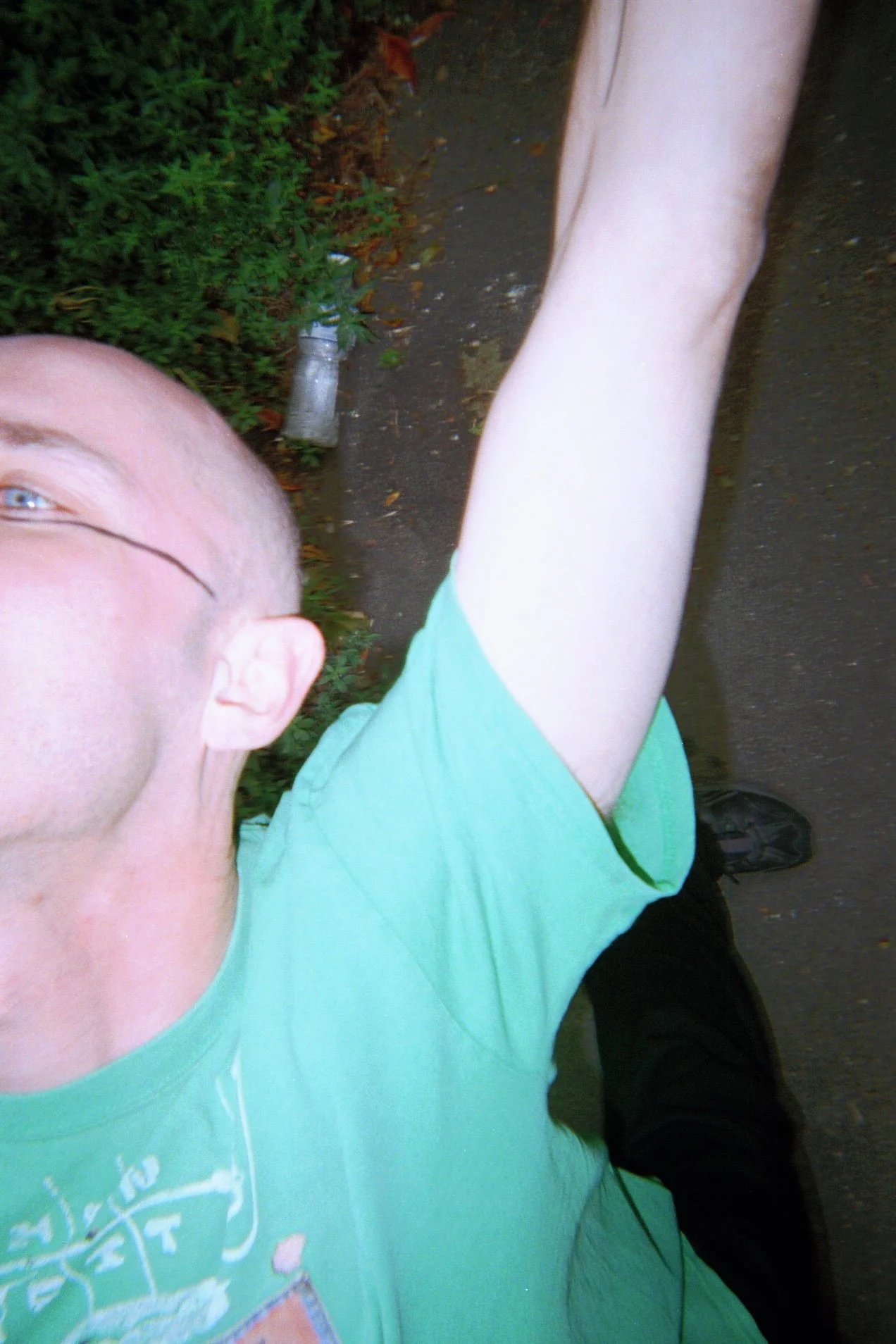
My encounter with Ulysse is more recent. He was passing through Los Angeles, where I live part of the year, and we spent time together in the studio without any particular objective at first, simply with the desire to see what might emerge from the meeting. I was immediately moved by his universe, both as a dancer and as a musician and composer. At that time, I had become increasingly interested in the form of the solo and in what it reveals about a performer. This reflection had notably been nourished by an experience with Benjamin Millepied, who had invited me to create a solo work for him. Working together, I discovered a particular fascination for the one-to-one relationship with a performer and for this form of choreographic portraiture. How does one tell the story of a journey, of memories, dreams, an entire life in dance, through a single body?
When I began imagining a project with Marion and Ulysse, I never conceived of bringing them together as a duo. What interested me instead was placing two singular trajectories side by side. Both share a training at the Paris Opera and exceptional careers as performers, yet their sensibilities, imaginaries, and artistic paths are profoundly different. I wanted to create a work grounded in who they are today: two artists at the height of their craft, bearers of immense memory and of a deeply personal relationship to their art.
YOU CONCEIVED THIS WORK FOR UNCONVENTIONAL SPACES. WHAT LED YOU TO IMAGINE DANCE WITHIN VENUES OF MONUMENTAL SCALE?
I believe I have always been drawn to these extraordinary spaces, though it is not merely a question of size or architecture. They interest me because they often bear the traces of what has been lived there before us. I am thinking in particular of the Roman Arena of Nîmes, where the work will be presented. From the outset, I imagined this piece as an encounter between a performer and a place. I did not want space to function as a mere backdrop; I wanted it to become an integral part of the experience. Marion and Ulysse are also two performers of immense presence, and I wanted to offer them a field of play commensurate with their dance.
I also feel that large spaces leave more room for the imagination. The Grande Halle de la Villette offers especially fertile ground for this exploration. It is also a place charged with personal memory for me. I danced one of my very first professional performances there with Régine Chopinot’s Ballet Atlantique. Like many artists, I associate the space with precise memories, images, and emotions. It is overwhelming not only because of its scale, but because of the collective memory it contains. When we first visited the site, I was struck by everything this immense volume seemed capable of expressing on its own. The emptiness itself became almost a material. Yet that emptiness never evokes absence for me. On the contrary, it summons presences. I often feel that one never dances entirely alone on a stage. There are always memories, loved ones, artists who came before us, figures who accompany us. In a place such as the Grande Halle, this sensation is particularly powerful. These vast spaces are inhabited by ghosts, in the poetic sense of the term. They hold all the memories that have passed through them. It is also why I wanted the audience to share the same space as the performers. We are together within this immensity, gathered inside the same landscape.
HOW DID YOU APPROACH THE CHOREOGRAPHIC WRITING AT SUCH A SCALE?
It is evident that in spaces of this magnitude, everything shifts in perspective. Bodies, distances, and durations are no longer perceived in the same way. A simple walk, a glance, or a moment of stillness can suddenly acquire unexpected breadth. This reality naturally shaped our way of composing the piece. My relationship to cinema has also undoubtedly influenced this way of thinking about space. I often approach creation through questions of framing, viewpoint, and distance. What interests me is the way a body can change nature depending on where it is observed from. At times it becomes almost abstract, a form or silhouette within the landscape. At others, it recovers its full humanity.
HOW WAS THE MUSICAL DIMENSION OF ULYSSE MARION DEVELOPED?
Very early on, I wanted each solo to develop its own sonic universe, in keeping with the artistic identity of each performer. For Marion, we worked with Pierre Aviat, a composer of film music. I was deeply sensitive to the narrative and cinematic quality of his compositions. In this portrait, I wanted to recover that ability to evoke images, memories, and emotions through sound. Together, Pierre and I imagined a score that guides the spectator through a sensitive landscape. The music opens spaces, suggests atmospheres, and at times allows reminiscences to surface, like fragments of memory accompanying Marion’s presence. Certain sounds evoke memories of dance, places, or moments from her life.
With Ulysse, the approach was entirely different. Music is an integral part of his artistic practice. He is not only a dancer, but also a musician, composer, and singer. Very quickly, it became obvious to us that this dimension needed to be fully present in the work. His solo was therefore built around his own compositions. Here, music becomes a material for play on the same level as movement. I also like to think of music as another gateway into these two artists. It grants access to their inner worlds, to emotions, memories, and sensations that dance alone does not always reveal.
FOR THIS CREATION, YOU ARE ONCE AGAIN COLLABORATING WITH LIGHTING DESIGNER YVES GODIN, WITH WHOM YOU HAVE WORKED FOR MANY YEARS. HOW DID YOU CONCEIVE THE LIGHTING FOR ULYSSE MARION?
My collaboration with Yves is founded above all on deep trust. When I invite him into a project, I am not calling upon a lighting designer tasked with executing a pre-existing vision. I am inviting an artist to take part in the adventure. This way of working is extremely dear to me: each person arrives with their own gaze, sensibility, and intuitions, and the project is built through that encounter.
For this project, we very quickly began speaking about the performers, the spaces, and the way light could accompany the presence of Marion and Ulysse without ever overpowering them. The work is built upon two portraits, two very strong individualities. It was important that the lighting remain in service of that encounter. What moves me particularly in Yves’s work is his ability to reveal a place. He never considers light as a merely technical tool, and I know how sensitive he is to architecture. Here, that dimension is essential because the project was conceived for venues whose architecture plays a major role in the experience of the performance.
Yves and I also share a profound relationship to cinema. I have always been sensitive to the way he constructs images. I often have the impression that he composes landscapes or visual tableaux rather than simply illuminating a stage. He creates depths, apparitions, shadows, and vanishing points that alter our perception of bodies and space. From the outset, we knew the piece would be presented in very different locations. This reality led us to think of light as an open form of writing, capable of reinventing itself with each new architecture. Volumes, heights, materials, perspectives, and even natural light profoundly transform the experience of the work. Yves and I wanted each space to participate in the writing of the light itself.
COULD YOU GIVE US AN INSIGHT INTO THE CHOREOGRAPHIC PROCESS WITH ULYSSE AND MARION?
The work began with long periods of studio research made up of conversations, improvisations, and experimentation. What interested me was beginning from them: from their journeys, their memories, and their personal relationship to dance. We therefore spent a great deal of time talking before even beginning to work on movement. We spoke about their childhoods, their training at the Paris Opera, the works that had marked them, significant encounters, moments of doubt, or transformation.
With Marion, for instance, we revisited certain exercises learned at a very young age, technical gestures repeated thousands of times throughout her training. What interested me was not the exercise itself, but what it signified today. How does a movement learned at the age of ten resonate within the body of an adult artist? What traces does it leave? What memories does it awaken?
We also worked from memories of the stage. I asked her to think back to certain roles or duets that had marked her journey. From there, we imagined situations in which absent partners continued to exist through her body. How can one make a weight, a presence, or a relationship perceptible when the other person is no longer there? These questions nourished an important part of the work.
With Ulysse, the process followed different paths. We began from his musical practice, from his way of inhabiting movement, and from his deeply personal relationship to dance and performance. Once again, it was less a matter of inventing than of allowing something already present to emerge. Part of the work consisted in creating the conditions for that emergence, then organising this material into form.
The question of virtuosity also occupied an important place in this work. Marion and Ulysse possess extraordinary abilities forged through years of practice. I had no desire whatsoever to suppress them. On the contrary, I wanted that mastery to become a dramatic and emotional tool. Virtuosity is not there to demonstrate performance; it makes visible the pleasure of movement, its power, and its capacity to generate emotion.
LARGE-SCALE VENUES MOST OFTEN HOST GRAND PRODUCTIONS, AMBITIOUS STAGINGS INVOLVING NUMEROUS PERFORMERS. IS THIS PROJECT ALSO A WAY OF REMINDING US THAT MONUMENTAL SPACES CAN ACCOMMODATE OTHER CHOREOGRAPHIC EXPERIENCES BEYOND SPECTACLE AND EXCESS?
My experience leads me to believe that the power of a work does not necessarily depend upon its scale. I tend instead to believe in the power of dance itself, in its capacity to hold our attention and produce emotion. In the case of Ulysse Marion, I never felt that the immensity of the space required a corresponding increase in technical means or spectacle. I have absolute confidence in the presence of Marion or Ulysse alone at the centre of a place like the Grande Halle de la Villette. In fact, I find that this very situation produces something especially powerful.
The experiments we carried out only confirmed this intuition. Many spectators spoke to us of an unexpected sense of intimacy. And I believe we sometimes underestimate dance’s ability to create intensity through a remarkable economy of means.
2026
Maison des Arts du Léman
June 6 - Thonon-les-Bains, France
in the framework of 60 ans MAL
Agora, Cité internationale de la danse Montpellier Danse
Jun 20 + 22 - Montpellier, France
Théâtre de Nîmes
Sept 26 + 27 - Nîmes, France
RedCat
October 20 + 21 - Los Angeles, US
La Villette
Nov 21-23 - Paris, France